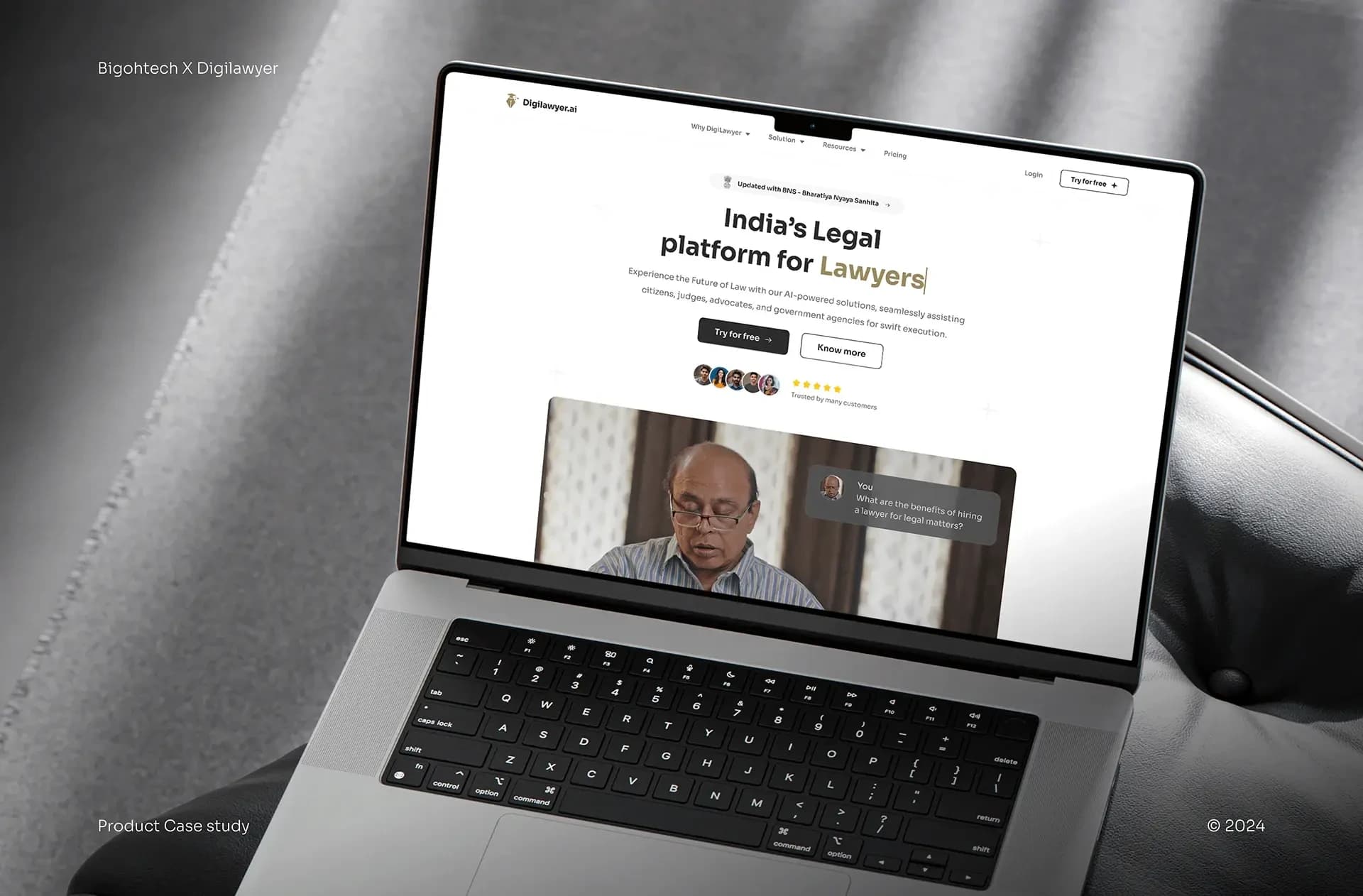
Drag. Four questions and a phone call became one field on the first screen.
THE SITUATION
Every lead began with a lesson the page should have taught.
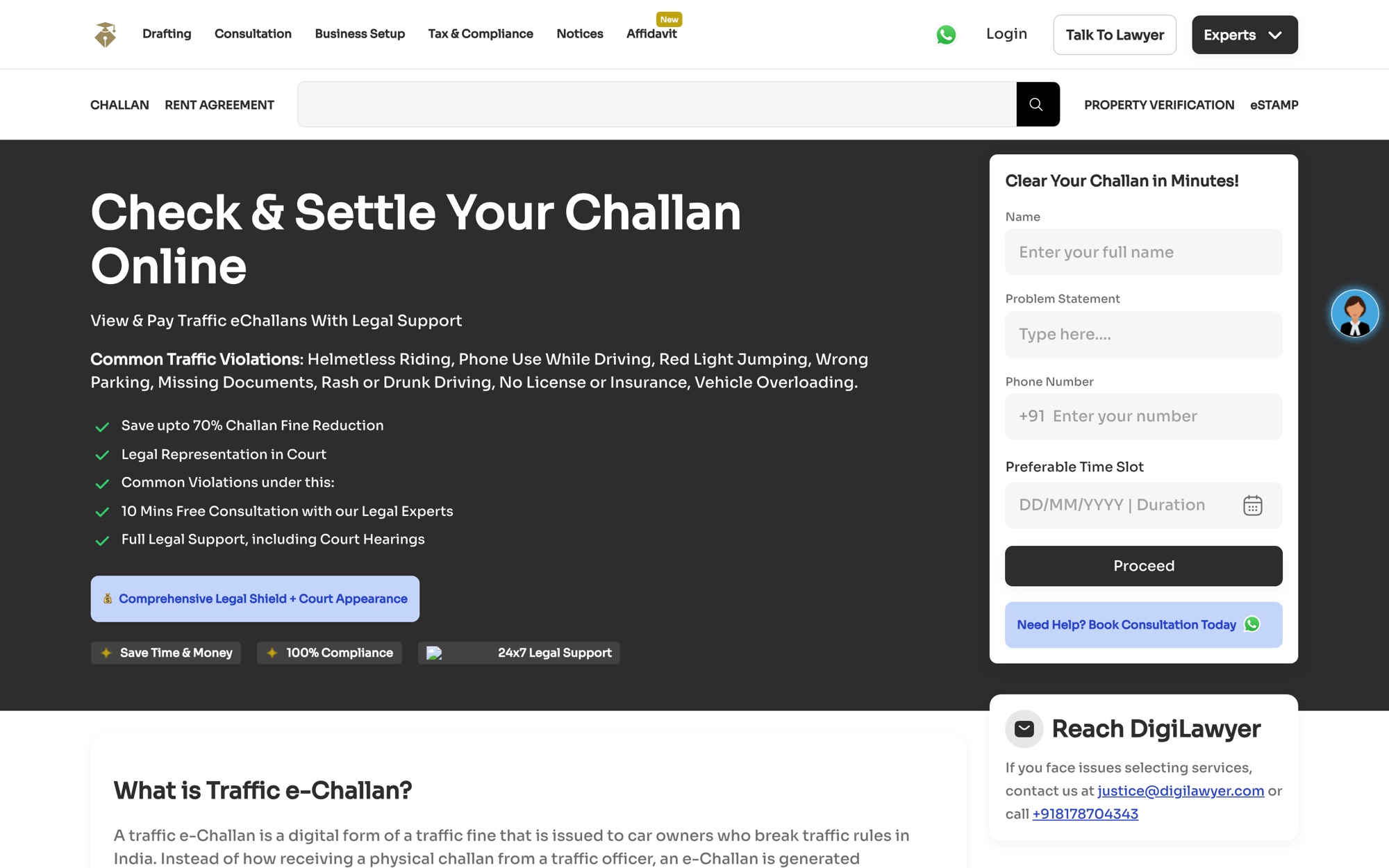
A challan is an Indian traffic fine, and two kinds of it land on the same page. An e-challan is paid in full and needs no lawyer at all. A court challan can be argued down by up to 50% for a fee, and it is the only one a consultation is worth having about. The October 2025 page offered everyone the same consultation.
CORE CHALLENGE
Tell the two kinds of customer apart on the first screen, so only the one who needs a lawyer ever gets a call.
- Name
- Problem
- Phone
- Slot
27%
Of Dec 25's visits became a lead. Every one became a call.
GA4, /challan
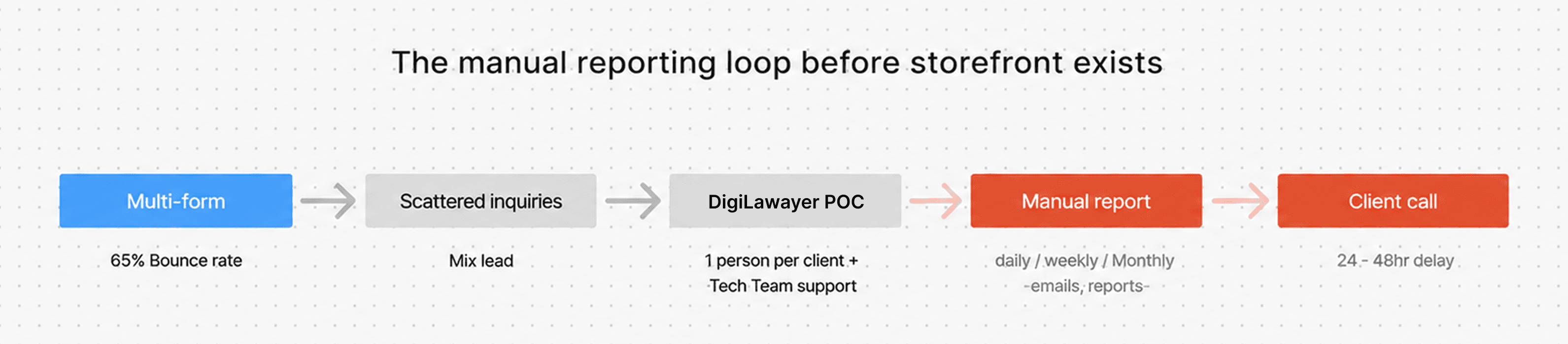
The form was step one of five. A person did the last two by hand, on every lead, including the ones we could not help.
WHAT PEOPLE THOUGHT THEY WERE BUYING
A discount on their challan
The page led with a settlement and never said which challans qualify. An e-challan does not: it is paid in full, whoever you go through.
A fine that would shrink
Nothing separated our fee from the fine itself, so a small number on the page turned into a much bigger number on the call.
A lawyer, whoever they were
Everyone was offered the same consultation, including the people who only needed to pay, and the people in states where we cannot settle a challan at all.
WHAT THE CALL HAD TO SORT OUT
Whether there was anything to sell
Only a court challan is worth a consultation. The free-text box could not tell one from the other, and neither could the customer, so sales got every lead instead of the ones they could help.
Whether we could help at all
Without a vehicle number nobody could look up a challan, so the type, the state and the amount all had to come out of conversation.
Why the bill was bigger than the page implied
This is where people got angry at the salesperson, and where leads went quiet and never came back.
Which meant the number to move was never the lead rate. It was the share of people who could answer their own question before anyone picked up a phone.
THE USERS
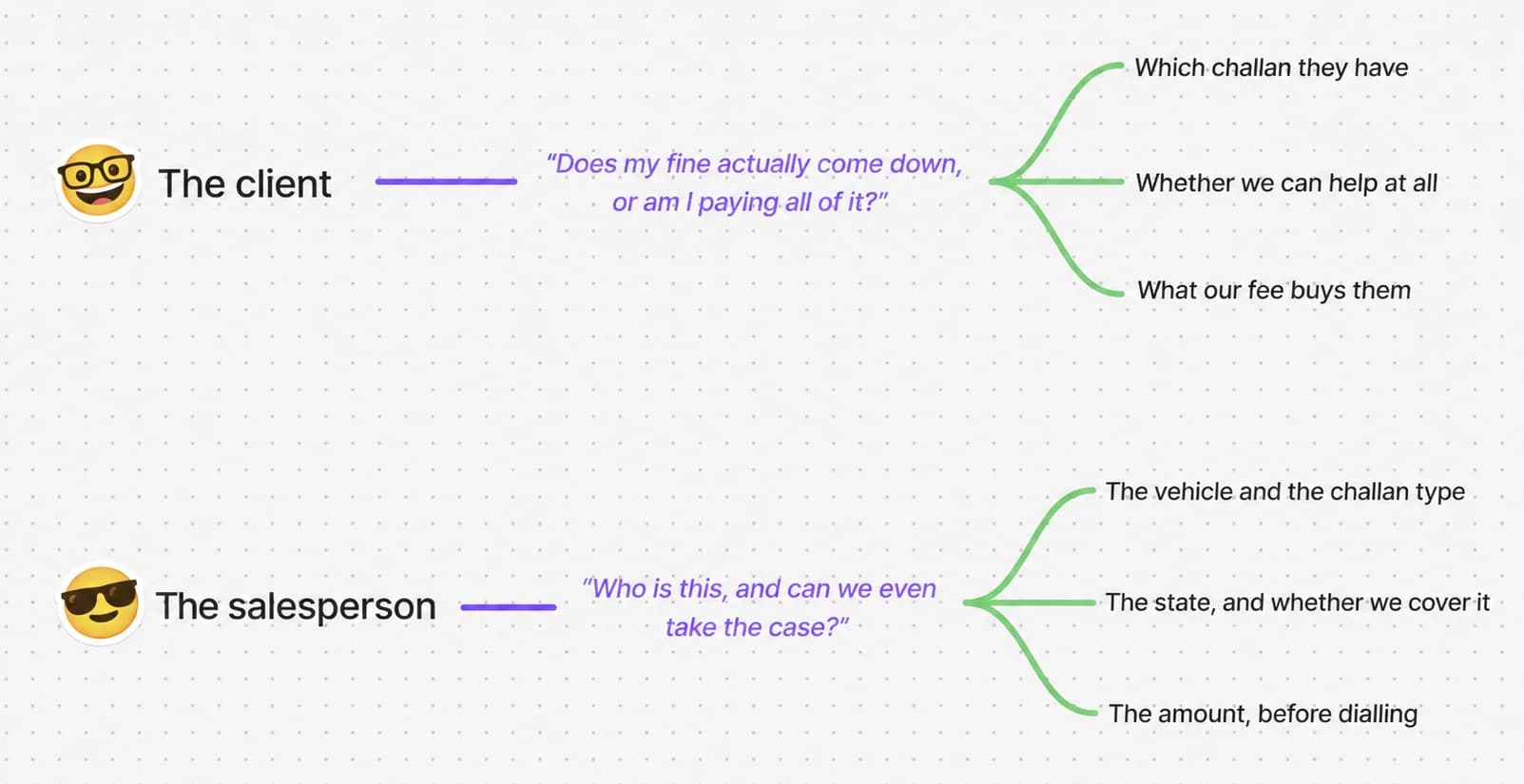
Two people, stuck on either side of the same call.
One could not find out which challan they had. The other could not find out who was on the line.
“We're bleeding resources on customers who have a challan, but we don't know it. They leave a number, we call, and we still don't know how many challans they have. We need their vehicle information. And people don't trust us yet. We're a new company.”
The client
“I just want to know what I owe. Do I even need a lawyer for this?”
Needs the amount, not a lawyer. Only a court challan is worth a call. Mobile, first time, in a hurry. Wins by paying without calling us.
The salesperson
“Who is this, what have they got, and can we even take the case?”
Needs court-challan leads only. Got all of them instead. 30 to 45 minutes a lead, most of it teaching.
The core constraint: one screen had to serve both. Everything the salesperson explained by phone had to become something the client could read, and one vehicle number had to answer it for both.
The guardrail was payment. A check nobody pays for is not an improvement, it is a cheaper way to lose the same customer.
PAIN POINTS
Every lead was a phone call, and most calls were lessons.
01
Every lead, a call
27% of December's visits became a lead, and every one became a phone call.
02
30 to 45 minutes a lead
Most of it spent teaching what the page should have said.
03
Free text sorted nothing
It told us how people felt, not what they owed or which kind of challan they had.
04
No vehicle number, no lookup
The type, the state and the amount all had to come out of conversation.
05
A bigger bill than promised
Where people got angry at the salesperson, and where leads went quiet.
THE PROBLEM
The page created work the team couldn't do.
Then December's National Lok Adalat arrived, the national court day for settling pending challans. Page views jumped more than 20 times in a month, 27% of visits became a lead, and every one of them was a phone call.
The assumption we started with
THE ASSUMPTION
Put the vehicle number in the form. Sales will know who they are calling, and the calls will get shorter.
WHAT ACTUALLY HAPPENED
We shipped it in February. Fewer people filled the form in at all, and the ones who did still sat waiting for a call.
Two problems, which turned out to be one
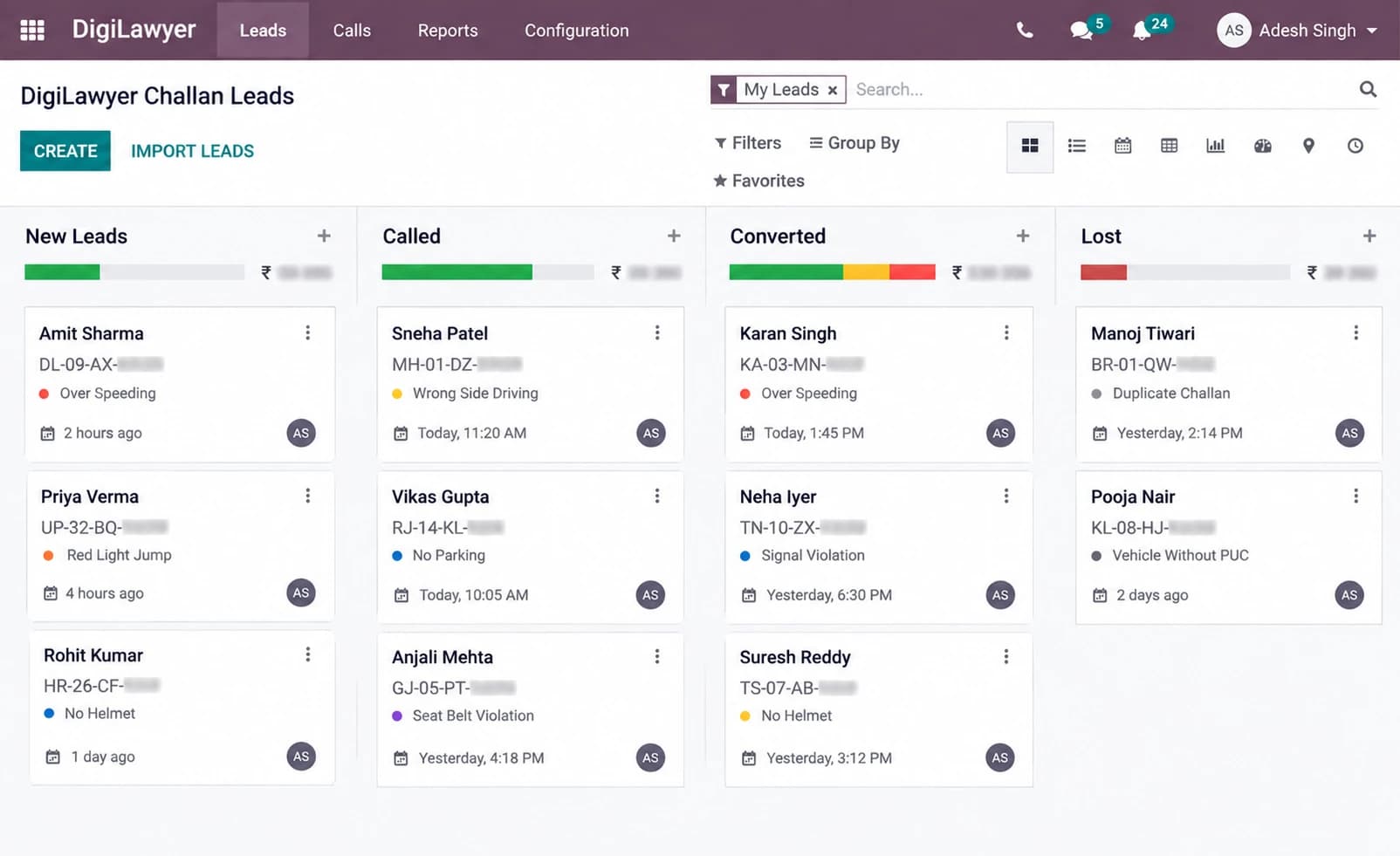
The job was to let someone settle a challan without a phone call, and to give the sales team back the hours they were losing to leads they could never help. Two problems to solve:
Let the client answer their own question instead of booking a call
- Show what they owe from a vehicle number alone, before any contact details
- Say on the page which challans can be reduced and which have to be paid in full
Send sales only the cases they can actually close
- Establish the challan type and the state before anyone books a call
- Turn a 30-to-45-minute teaching call into a conversation about settling
How I found it
SALES · DEC 2025
Every lead needed a call just to learn the vehicle number, so the team had no way to know who was worth ringing first.
GA4 · DEC 2025
27% of visits became leads in one Lok Adalat month. Each was a call a team with no dedicated sales had to make.
CLARITY + POSTHOG · MAR 2026
After February's form shipped, replays and heatmaps showed the same thing: people typed their name, then left before the last field.
Asking for the vehicle number was right. Asking for it alongside three other things was not.
DESIGN GOALS
Design goals
01
Let the client answer their own question
Show what they owe from a vehicle number alone, before any contact details.
02
Send sales only the cases they can close
Establish the challan type and the state before anyone books a call.
03
Say what can be reduced
On the page: which challans can be argued down and which are paid in full.
04
Payment is the guardrail
A check nobody pays for is a cheaper way to lose the same customer.
THE DECISION
The decision: the same form, three times.
Scroll, or tap a version. Watch what the page asked for, and the share of visits that acted.
OCT 2025 form: Name, Problem statement, Phone number, Preferable time slot; button "Proceed".
OCT 2025 · Book a lawyer
27%
of visits became a lead · Dec 2025, a Lok Adalat month
Free text told us how people felt, not what they owed. Every lead was a call.
THE VERSIONS
Three versions, each shipped before a Lok Adalat.
Tap a version, then the numbers on the screen, to see what changed and why. Phones first: they bring twice the traffic of desktop on this page.
VERSION 1 · OCT 2025
Book a lawyer
It asked for a name, the problem in free text, a phone number and a time slot, and never for the vehicle number. No price, and nothing to show anyone had used DigiLawyer before. The leads it did bring became calls we couldn't keep up with.
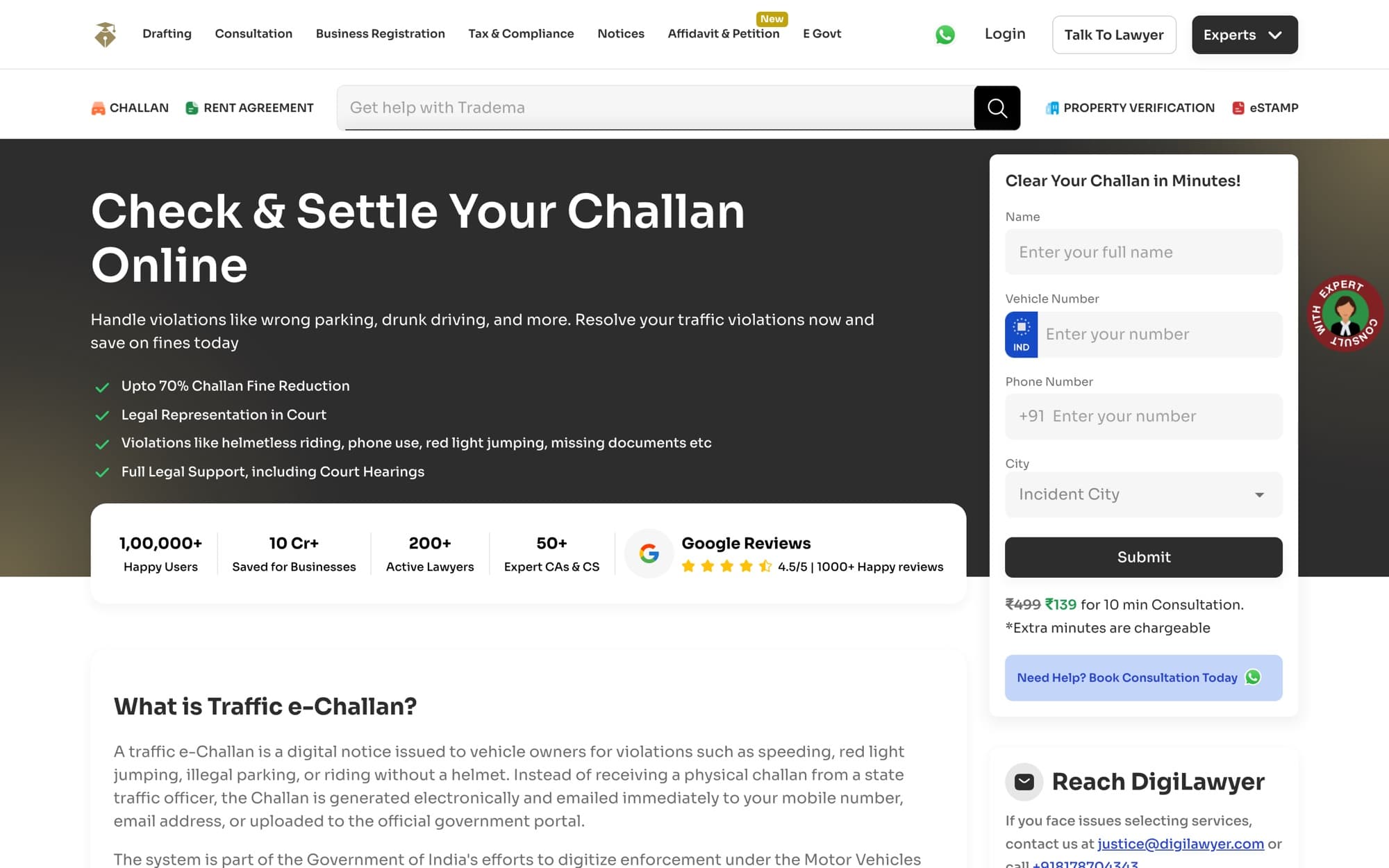
VERSION 2 · FEB 2026
Qualify the lead
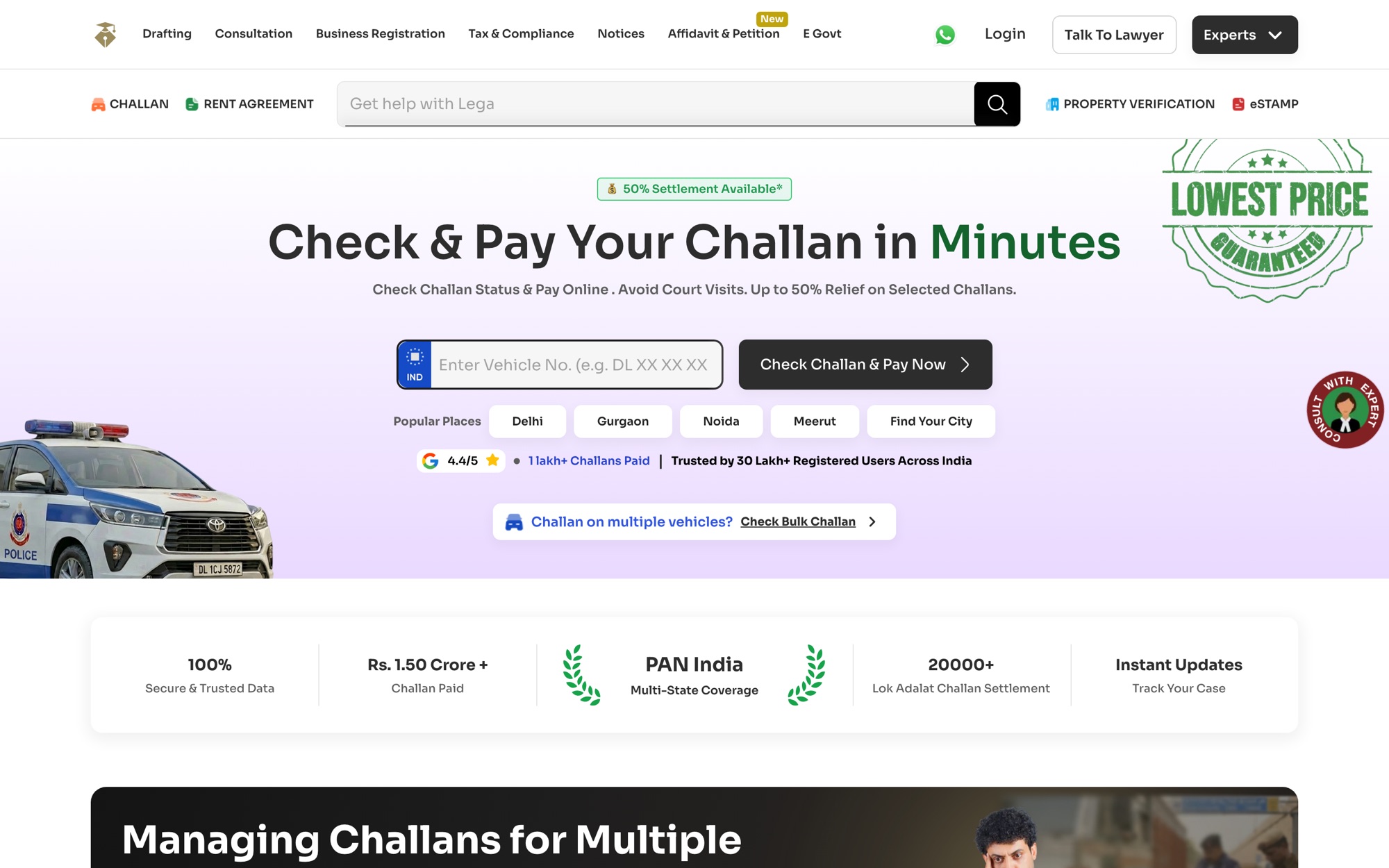
Free text became a vehicle number and a city, ₹139 went next to the button, and a trust bar went under the headline. Fewer people filled it in: 27% to 14% in Lok Adalat months. Paying still meant a salesperson.
VERSION 3 · MAY 2026
Check & pay
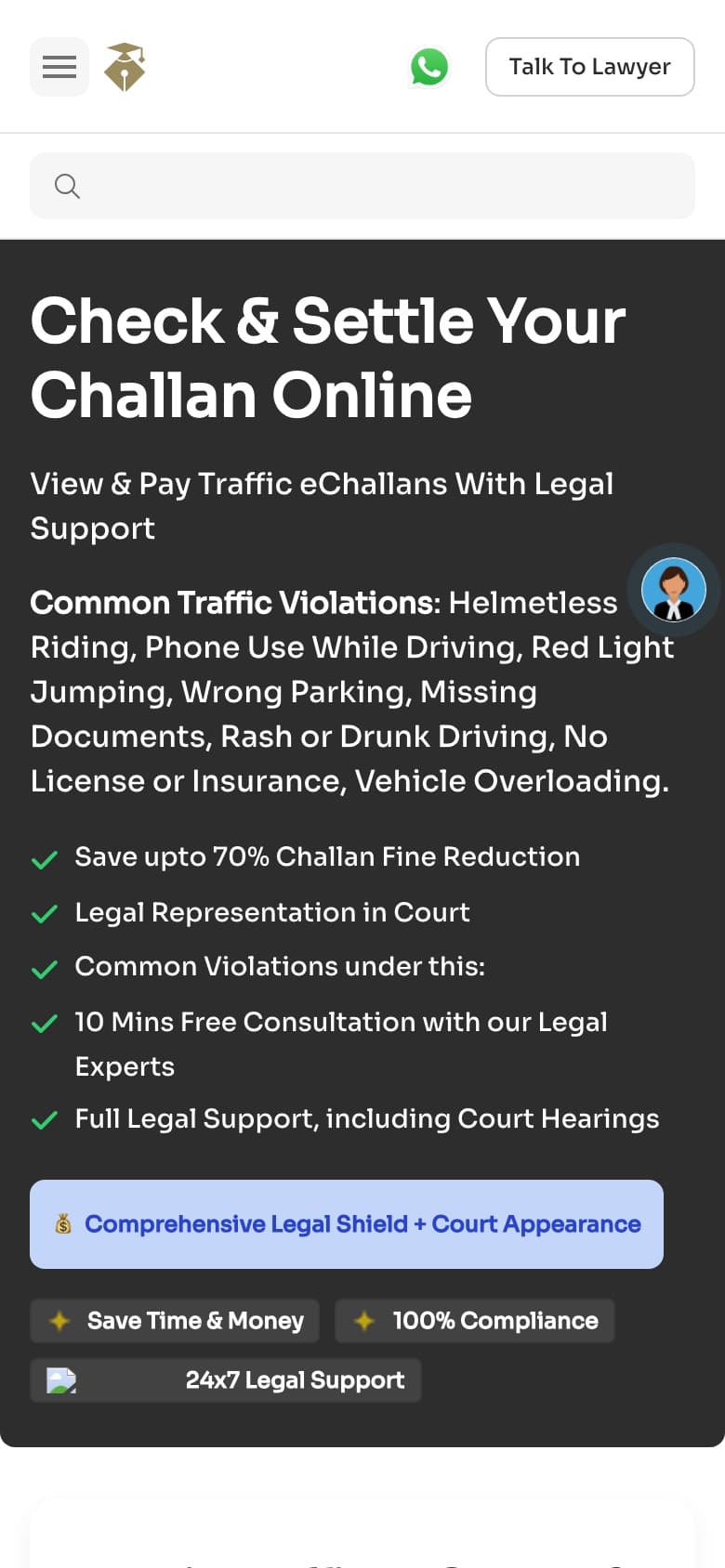
One field. A vehicle number, an OTP, then your challans, and the dashboard flow I had already built. "Settle" became "Pay", and fleets got their own door. 42% of visits started a check in June, holding at 38-45% in quiet months.
SOLUTION
Core solution modules
01
The storefront
One field, proof beside the button, a door for fleets.
02
City and Lok Adalat pages
A page per city and per settlement date, each built for a different search.
03
Vehicle number, then OTP
The number is the whole form. The OTP confirms the phone.
04
Challans on screen
The Parivahan integration fetches every challan on the vehicle and lists them.
05
Pay, in the dashboard
Through the payment flow I had already streamlined.
The dashboard, in DigiLawyer
COMPONENTS
What the page is built from
- Vehicle-number field
- OTP input
- Challan list
- Price beside the button
- Trust bar
- Fleet entry
- City page template
- Lok Adalat page template
- Payment handoff
TRADE-OFFS
What each version cost us.
Every one of these made something worse on purpose. That was the point.
| DECISION | WHAT WE GAINED | WHAT WE GAVE UP | WHY IT WAS WORTH IT |
|---|---|---|---|
| Ask for the vehicle number first (Feb) | Leads sales could act on | Lead volume: 27% to 14% | Every lead was costing a call |
| Show ₹139 before the call (Feb) | Trust, and fewer dead leads | The free-consultation hook | People knew the price before committing |
| Show challans before asking who you are (May) | 42% of visits start a check | Knowing who is on the page | Value first, identity at the OTP |
| Ship the month before Lok Adalat | Ready for the spike | Launching into the busiest month | The spike is when the page has to work |
| Keep sales for complex cases | Hard cases still get solved | Full automation: 2 in 5 still call | Some challans need a person |
WHAT I REJECTED
Selling a consultation
February put ₹139 for a 10-minute consultation next to the form. I dropped it in May. Nobody with a challan wants a consultation; they want the challan paid, and by then they could pay it themselves. Name, phone and city went with it. A vehicle number and an OTP are the only two things we need to settle a challan, and anything else we can ask for later, inside the flow, instead of loading it all onto the first screen.
HOW IT'S BUILT
From a Google search to a paid challan, in one field.
Search brings people to a page built for their city or their question. From there it is one field to a paid challan.
- 01SearchAround 80% of new users arrive from Google.SEO + content
- 02City or Lok Adalat pageA page per city and per settlement date, each built for a different search.Designed by me
- 03The storefront/challan: one field, proof beside the button, a door for fleets.Designed by me
- 04Vehicle number, then OTPThe number is the whole form. The OTP confirms the phone.Designed by me
- 05Challans on screenOur Parivahan integration takes the vehicle number and the OTP, fetches every challan on that vehicle and lists them.Built by me
- 06Pay, in the dashboardThe steps to pay were already streamlined in a flow I had designed.Designed by me
| PAGE | VIEWS | AVG ENGAGEMENT |
|---|---|---|
| Lok Adalat settlement dates | 14,574 | 1m 00s |
| /challan, the storefront | 6,512 | 56s |
| Challan in Delhi | 3,463 | 58s |
| Settle bulk challan | 373 | 1m 42s |
GA4, 21 Aug to 17 Sep 2026. Content brings people in; the storefront converts them. Fleet owners on the bulk page stay the longest.
PROCESS
From discovery to handoff
VERSION 2February 2026: qualify the lead 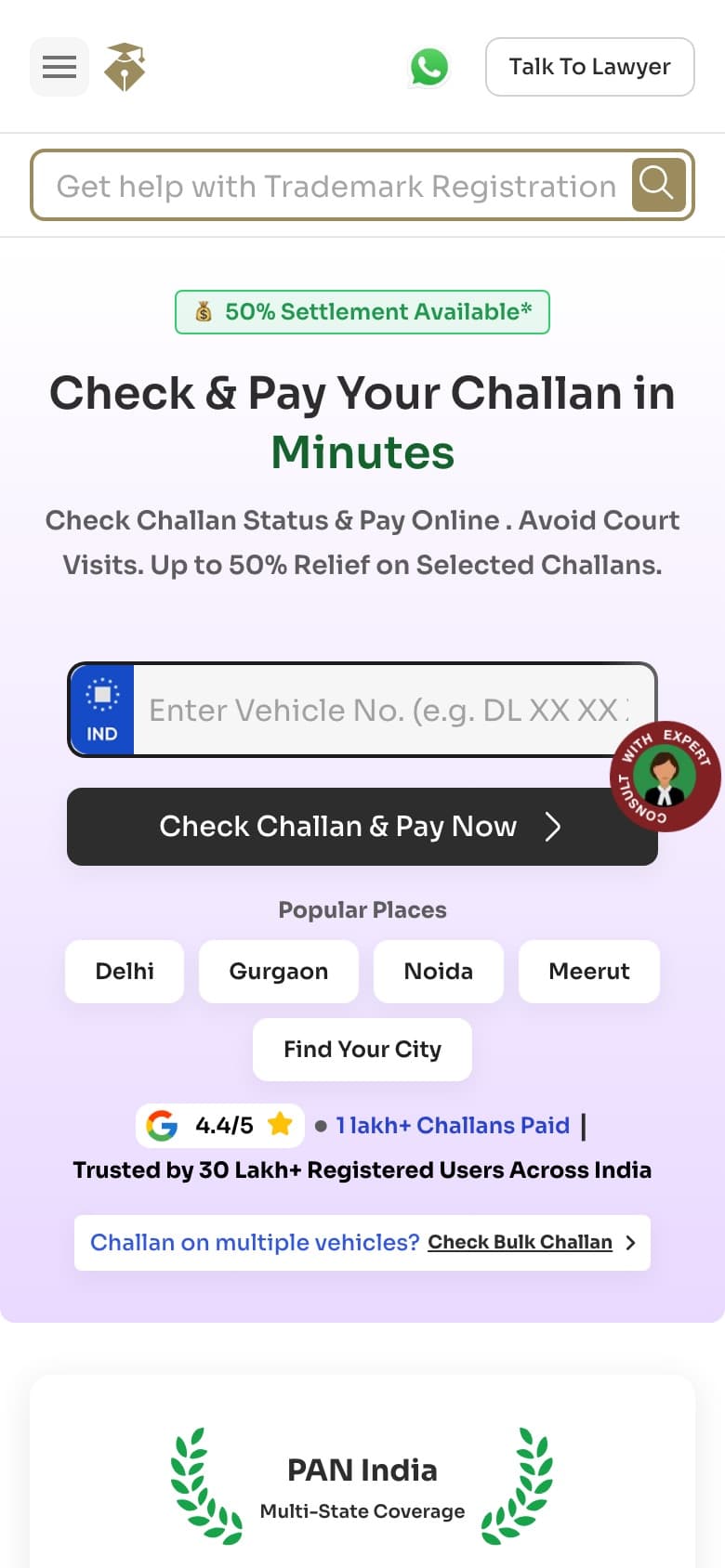
PRODUCTNow: check and pay, on a phone
OUTCOMES
Outcomes
FIELDS TO SEE A CHALLAN
4 → 1
PAID WITH NO SALES CALL
3 in 5
August 2026, sales-team figures.
VISITS STARTING A CHECK
27% → 42%
A lead in Dec 2025; a check in Jun 2026.
SELF-SERVE SHARE
~40%
Of DigiLawyer's ~₹1M a month, mostly through challan.
IMPACT
More people act on their own. Fewer need a call.
Share of /challan visits that turned into a lead or a check, month by month. Lok Adalat months are shaded, because event traffic behaves differently — compare them with each other.
GA4, /challan, website only. Form submissions ÷ page views. Starts Dec 2025, when tracking became reliable. Jan is a transition month. * 1–18 Sep.
| V1 · BOOK A LAWYER | V2 · QUALIFY THE LEAD | V3 · CHECK & PAY | |
|---|---|---|---|
| Live from | Oct 2025 | Feb 2026 | May 2026 |
| Fields before any value | 4 | 4 | 1 |
| Visits → lead or check, Lok Adalat month | 27% (Dec) | 14% (Mar) | 42% (Jun) |
| Avg engagement time | — | 147s (Feb) | 60–80s |
| Paid without a salesperson | none | none | 3 in 5 paying leads (Aug) |
How I measured it. Version 3's "check" is a vehicle-number lookup — a smaller ask than the lead form before it. That smaller ask was the design decision, so this rate measures who started, not who paid. Paid figures come from the sales team for August 2026; a CRM export wasn't available.
What I'm not claiming: traffic. Monthly users on /challan grew about 35×, but search and Lok Adalat did that, not the redesign. The engagement rate fell from 87% to 42% as more casual visitors arrived. And the ~₹1M a month is all of DigiLawyer: about 60% still comes through sales. Self-serve is around 40% and growing, not yet the larger share.
THE TEAM
The team
The people who built it with me. Hover or tap a card for what the process cost them.

Adesh Singh
Founding Product Designer
Pain pointVersion one shipped before reliable tracking, so its results were almost impossible to measure.Nitansh Anand
Product Designer
Shivaditya
Product Owner
Shivendra
Tech Lead
Sourabh Kapoor
CEO
Pain pointEvery lead was a phone call, and sales couldn't tell who had a challan before dialling.10+ Developers
Engineering
WHAT'S LEFT
Half of our leads still never pay.
Half of our leads never pay
August 2026, sales-team figures.
2 in 5 paying customers still need a salesperson
Sales still brings in most of the revenue.
The lookup still fails, and a person has to catch it
The government API sometimes returns that a challan exists without returning its details. The customer can see there is something and not what it is, so they call. Self-serve cannot remove the phone line until that is solid.
People do not know they can do it themselves
Check, OTP, see the list, pay. Teaching that is the next job, and it is a content problem as much as an interface one.
The goal
Self-serve revenue overtakes sales revenue by the end of 2026.
REFLECTION
What I would do differently
REFLECTION
I would measure from day one. Reliable event tracking only arrived in December 2025, so the October version has almost no clean data, and its best number comes from a single spike month.
The number to move was never the lead rate
It was the share of people who could answer their own question before anyone picked up a phone.